
Legal Architecture, Political Economy, and Strategic Restraint in Maritime Sanctions Enforcement
Introduction
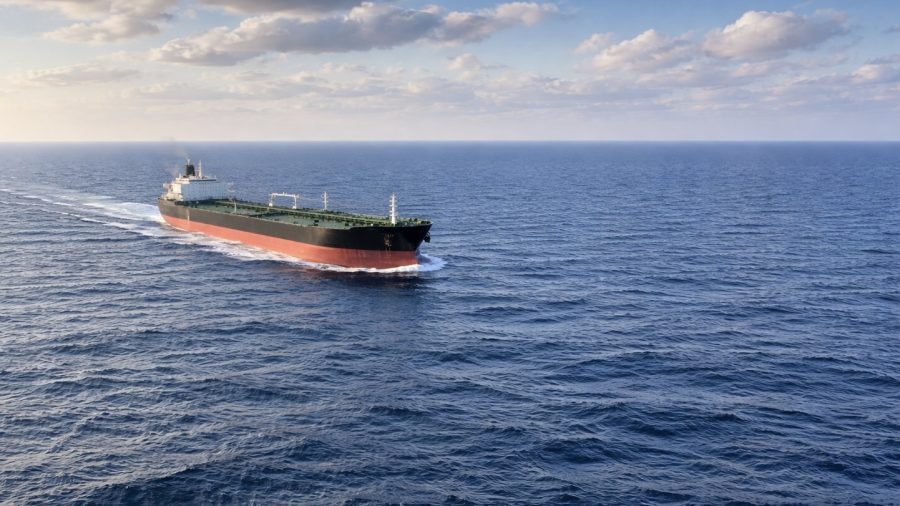
In early January 2026, the United States seized at least five oil tankers as part of a declared blockade on Venezuelan oil exports following the capture of Nicolás Maduro.[1] The seizures included vessels that had previously transported sanctioned Russian crude, with Russia’s Transport Ministry protesting that the interdictions violated the 1982 UN Convention on the Law of the Sea and amounted to ‘outright piracy’.[2] These dramatic events raise an obvious question: if the United States is willing to pursue tankers across the Atlantic and board them in international waters, why does the West tolerate over a thousand shadow fleet vessels continuing to transport Russian oil with apparent impunity?
The answer is not that Western navies lack the capability to interdict more vessels, nor that international law straightforwardly prohibits such action. Rather, the restraint reflects a convergence of three distinct logics: a legal architecture that channels enforcement toward indirect mechanisms; a political economy in which the sanctions regime was deliberately designed to tolerate evasion; and a strategic calculus about precedent and escalation that makes routine interdiction unattractive even when technically feasible.
This article synthesises the emerging academic and policy literature on these questions to provide an explanatory framework for understanding Western enforcement choices.
I. The Legal Architecture: UNCLOS and the Limits of Coastal State Jurisdiction
The international legal framework governing maritime enforcement does not prohibit action against shadow fleet vessels, but it does channel such action toward particular mechanisms while raising the costs of others. Understanding this architecture is essential for grasping why Western states have relied primarily on what might be called ‘paper levers’, insurance requirements, port state controls, and flag state pressure, rather than physical interdiction.
The Flag State System and Its Weaknesses
The 1982 United Nations Convention on the Law of the Sea establishes a framework in which primary enforcement responsibility rests with flag states—the states where vessels are registered. As Beckman, Nguyen, and Ong explain in their analysis of coastal state options, ‘it is extremely rare for IMO conventions to give any enforcement powers to coastal States over foreign ships navigating in the waters off their coast. The primary responsibility for enforcing rules and standards in IMO conventions rests with the flag State.’[3]
This creates an immediate problem for sanctions enforcement. Shadow fleet tankers systematically exploit the flag state system by registering with states that are ‘either unable or unwilling to require inspections to ensure that they comply with IMO rules and regulations.’[4] The RUSI analysis documents how vessels removed from one registry for sanctions violations can ‘re-register under another state, often within days,’ a practice known as ‘flag-hopping’ that has ‘reached a peak in 2025.’[5]
The weakness of flag state enforcement is structural rather than accidental. Many states operate ‘open’ registries that do not verify beneficial ownership, assess vessel histories, or screen for sanctions risks. Some registry functions are outsourced to private companies operating outside the territory of the nominal flag state, further attenuating oversight.[6]
Coastal State Enforcement: Limited but Not Absent
Coastal states do possess some enforcement authorities under UNCLOS, but these are hedged with significant constraints. Article 220 permits coastal states to enforce pollution regulations in their Exclusive Economic Zones, but only under specific circumstances. As Beckman, Nguyen, and Ong note, ‘the coastal State is not authorised to undertake a “physical inspection” of a foreign ship unless there are clear grounds’ to suspect violations, and this provision ‘reflects the fact that the LOSC protects the freedom of navigation in the EEZ by placing constraints on the power of coastal States.’[7]
The practical implication is that coastal states must frame enforcement actions in terms of safety, pollution prevention, and regulatory compliance rather than sanctions enforcement per se. This is why recent European measures have focused on insurance documentation, ship-to-ship transfer regulations, and automatic identification system requirements—these fit within existing jurisdictional doctrines without requiring novel legal theories.
The Innocent Passage Question
UNCLOS grants vessels a right of ‘innocent passage’ through territorial waters and straits. The question of whether shadow fleet activities render passage non-innocent has attracted considerable attention from those advocating more assertive enforcement. Nick Childs of the International Institute for Strategic Studies summarises the debate: ‘Advocates of the more permissive approach suggest that there is room for manoeuvre over what constitutes the threshold for action.’[8]
However, Childs notes the concern that ‘the argument that the Western-led coalition should adopt a more assertive, permissive and liberal approach to taking action at sea against the shadow fleet under the aegis of UNCLOS and its stated exceptions to the right to innocent passage raises the concern that it would encourage revisionist states—such as China via its maritime claims in the South China Sea, Iran over ship seizures in the Strait of Hormuz and Russia in the way it applies UNCLOS in the Arctic—to abuse the system.’[9]
This is the crux of the legal constraint as it actually operates. The issue is not that UNCLOS categorically prohibits interdiction, but that any legal theory permissive enough to justify routine boarding of shadow fleet vessels would also be available to adversaries pursuing quite different objectives.
II. The Political Economy: A Sanctions Regime Designed to Tolerate Evasion
The legal architecture explains why Western enforcement has favoured indirect mechanisms, but it does not explain why Western states have not pushed harder at the boundaries of what is legally permissible. The deeper answer lies in the design of the sanctions regime itself, which was constructed to reduce Russian revenue while maintaining global oil supply.
The Price Cap’s Design Logic
The G7 price cap, implemented in December 2022, was explicitly designed to balance two objectives that stand in tension with each other. As the European Parliament briefing explains, the regime seeks to ‘curb the Kremlin’s revenues which finance its war effort’ while ‘restricts profits while still allowing sales below a certain price.’[10] The mechanism works by denying Western shipping services—crucially, insurance from the International Group of P&I Clubs—to vessels carrying Russian oil priced above the cap.
Spiro, Wachtmeister, and Gars, in the most rigorous empirical assessment to date, conclude that ‘the price cap has not primarily functioned as a binding price cap, but as a partial transport embargo, reinforcing the import embargo’s effects.’[11] The cap works by limiting the supply of tankers available to Russia, thereby increasing transport costs, rather than by directly constraining the price at which oil is sold.
The emergence of the shadow fleet was therefore not a failure of the sanctions regime but a predictable—indeed, predicted—response to its structure. The regime was ‘specifically designed to reduce Russia’s revenues without decreasing global supply.’[12] If Western policymakers had wanted to physically prevent Russian oil from reaching markets, they would have designed a different architecture. They chose one that could accommodate substantial evasion because the alternative was a supply shock that would destabilise energy markets and domestic politics.
The Scale of Shadow Shipping
The quantitative literature confirms that shadow shipping operates at enormous scale. Fernández-Villaverde, Li, Xu, and Zanetti estimate that ‘from 2017 to 2023, an average of 7.8 million metric tons of crude oil per month were exported via dark ships from Iran, Syria, Venezuela, and Russia, accounting for approximately 43% of total world seaborne crude oil exports recorded in UN Comtrade data.’[13]
More strikingly, the authors find that ‘after the G7 countries implemented a $60 per barrel price cap on Russian crude oil exports in December 2022, recorded global seaborne oil exports dropped sharply. However, sanctioned oil exports via dark shipping more than doubled, offsetting much of the reduction in supply and exerting downward pressure on global oil prices.’[14]
This is the revealed preference of the sanctions regime. The doubling of dark shipping was not an unintended consequence but the mechanism through which the regime achieved its actual objective: reducing Russian revenue per barrel while preventing the price spike that would have resulted from genuine supply interdiction.
III. The Strategic Calculus: Precedent, Escalation, and Coalition Management
Even if the legal and economic constraints were weaker, routine interdiction of shadow fleet vessels would raise strategic concerns that counsel restraint.
Precedent and Norm Fragmentation
The United States has long been the principal guarantor of freedom of navigation as a global norm. American naval power projection depends on predictable access to international waters and straits. Any doctrine that permits interdiction of commercial shipping on economic grounds creates precedents that adversaries could invoke in quite different contexts.
Childs articulates the concern directly: such a shift ‘would make it more difficult to challenge revisionist states on this issue and leave the West more vulnerable to charges it already faces of inconsistency in the application of global principles. This could complicate the challenge of winning support from the critical constituency of sceptical, hedging or opportunistic states, whose support and engagement will be key to deterring and choking off shadow-fleet operations.’[15]
The practical risk is that China could invoke a permissive interdiction doctrine in the Taiwan Strait, framing action against vessels trading with Taiwan as enforcement of domestic law. Iran could do the same in the Strait of Hormuz. Russia already interprets UNCLOS aggressively in the Arctic. Expanding the envelope of acceptable state behaviour would complicate the American position in each of these theatres.
Coalition Management
The sanctions regime operates through a coalition, not unilateral American action. European allies have different exposure to the trade-offs involved. The United Kingdom, as a major maritime services provider, has commercial interests in the existing framework’s predictability. Nordic and Baltic states have both significant shipping industries and direct exposure to shadow fleet environmental risks in their waters.
These states have pursued enhanced enforcement through mechanisms compatible with coalition maintenance: the UK’s Voluntary Insurance Reporting Mechanism, the EU’s mandatory ship reporting system introduced in April 2025, and diplomatic pressure on flag states.[16] Aggressive unilateral interdiction would strain these arrangements and potentially fragment the coalition.
Escalation Risk
The Venezuelan seizures illustrate both the possibility and the risks of assertive enforcement. Russia reportedly deployed a submarine to shadow one of the pursued tankers, and Moscow formally protested the interdictions as ‘piracy.’ The episode unfolded in the context of a declared blockade following regime change: circumstances quite different from routine sanctions enforcement.
Childs notes that more assertive approaches ‘could carry the risk of potential retaliatory and escalatory side effects.’[17] The question is not whether Western navies could board more vessels, but whether doing so routinely would invite responses (whether naval, economic, or diplomatic) that exceed the benefits of marginal enforcement gains.
IV. The Venezuelan Exception
The January 2026 Venezuelan seizures appear to contradict the pattern of restraint described above. However, they are better understood as confirming the rule by illustrating the exceptional circumstances required to overcome it.
The seizures occurred in the context of a declared ‘total and complete blockade’ of Venezuelan oil exports, following the capture of President Maduro and the installation of an interim government. The administration framed the interdictions explicitly as law enforcement actions under existing sanctions authorities, conducted with the cooperation of allied surveillance assets. The vessels seized had clear jurisdictional hooks: prior designation under US sanctions, involvement in documented violations, and in some cases US person involvement or financial system exposure.
This is interdiction in the context of regime change and explicit confrontation, not routine sanctions enforcement against an adversary with whom the West maintains complex relationships across multiple domains. The willingness to accept Russian protests, submarine shadowing, and accusations of piracy reflects a calculation that these costs are acceptable in the Venezuelan context. That calculation would look quite different for routine interdiction of Russian-linked tankers in the Baltic or the English Channel.
Conclusion
The question of why the West does not interdict more shadow fleet vessels resolves once we understand that the constraints are layered and mutually reinforcing. The legal architecture channels enforcement toward indirect mechanisms and raises the costs of novel theories. The sanctions regime was designed to reduce Russian revenue while maintaining supply, which means tolerating substantial evasion. The strategic calculus weighs precedent effects, coalition management, and escalation risks against marginal enforcement gains.
None of these constraints is absolute. The Venezuelan case demonstrates that circumstances can shift the calculus. Enhanced flag state pressure, insurance enforcement, and environmental regulations can tighten the screws incrementally. But the expectation that Western navies will begin routinely boarding shadow fleet tankers misunderstands the nature of the restraint. It is not weakness or legal naivety, but a considered judgment about objectives, costs, and risks.
For those frustrated by this state of affairs, the implication is clear: changing enforcement requires changing the underlying calculus. That might mean accepting higher energy prices in exchange for genuinely restrictive measures, building stronger coalitions for assertive action, or developing legal frameworks that expand coastal state authorities without creating exploitable precedents. Until then, the shadow fleet will continue to operate in the space that Western policy has deliberately left open.
Bibliography
Beckman, Robert, Trung Nguyen, and Joel Ong. “Possible Actions by Coastal States to Protect Their Marine Environment from Oil Tankers in the Dark Fleet.” The International Journal of Marine and Coastal Law 40, no. 1 (2025): 1–28.
Ben-Ur, Samuel, and Krystal Bermudez. “US Seizes More Tankers, Courts Oil Companies as Post-Maduro Venezuela Takes Shape.” Long War Journal, 13 January 2026. https://www.longwarjournal.org/archives/2026/01/us-seizes-more-tankers-courts-oil-companies-as-post-maduro-venezuela-takes-shape.php.
Caprile, Anna, and Gabija Leclerc. “Russia’s ‘Shadow Fleet’: Bringing the Threat to Light.” Briefing PE 766.242. Brussels: European Parliamentary Research Service, November 2024.
Childs, Nick. Russia’s ‘Shadow Fleet’ and Sanctions Evasion: What Is To Be Done? London: International Institute for Strategic Studies, January 2025.
Fernández-Villaverde, Jesús, Yiliang Li, Le Xu, and Francesco Zanetti. “Charting the Uncharted: The (Un)Intended Consequences of Oil Sanctions and Dark Shipping.” CESifo Working Paper No. 11684. February 10, 2025.
Saiz Erausquin, Gonzalo, and Tom Keatinge. “Countering Shadow Fleet Activity through Flag State Reform.” RUSI Insights Paper. London: Royal United Services Institute, 2 September 2025.
Spiro, Daniel, Henrik Wachtmeister, and Johan Gars. “Assessing the Impacts of Oil Sanctions on Russia.” Energy Policy 206 (2025): 114739.
[1]Samuel Ben-Ur and Krystal Bermudez, “US Seizes More Tankers, Courts Oil Companies as Post-Maduro Venezuela Takes Shape,” Long War Journal, 13 January 2026, https://www.longwarjournal.org/archives/2026/01/us-seizes-more-tankers-courts-oil-companies-as-post-maduro-venezuela-takes-shape.php.
[2]Ben-Ur and Bermudez, “US Seizes More Tankers.”
[3]Robert Beckman, Trung Nguyen, and Joel Ong, “Possible Actions by Coastal States to Protect Their Marine Environment from Oil Tankers in the Dark Fleet,” The International Journal of Marine and Coastal Law 40, no. 1 (2025): 3.
[4]Beckman, Nguyen, and Ong, “Possible Actions,” 11.
[5]Gonzalo Saiz Erausquin and Tom Keatinge, “Countering Shadow Fleet Activity through Flag State Reform,” RUSI Insights Paper (London: Royal United Services Institute, 2 September 2025).
[6]Saiz Erausquin and Keatinge, “Countering Shadow Fleet Activity.”
[8]Nick Childs, Russia’s ‘Shadow Fleet’ and Sanctions Evasion: What Is To Be Done? (London: International Institute for Strategic Studies, January 2025), 10.
[9]Childs, Russia’s ‘Shadow Fleet’, 10.
[10]Anna Caprile and Gabija Leclerc, “Russia’s ‘Shadow Fleet’: Bringing the Threat to Light,” Briefing PE 766.242 (Brussels: European Parliamentary Research Service, November 2024), 1.
[11]Daniel Spiro, Henrik Wachtmeister, and Johan Gars, “Assessing the Impacts of Oil Sanctions on Russia,” Energy Policy 206 (2025): 5.
[12]Spiro, Wachtmeister, and Gars, “Assessing the Impacts,” 5.
[13]Jesús Fernández-Villaverde, Yiliang Li, Le Xu, and Francesco Zanetti, “Charting the Uncharted: The (Un)Intended Consequences of Oil Sanctions and Dark Shipping,” CESifo Working Paper No. 11684 (February 10, 2025), 3.
[14]Fernández-Villaverde et al., “Charting the Uncharted,” 25.
[15]Childs, Russia’s ‘Shadow Fleet’, 8.
[17]Childs, Russia’s ‘Shadow Fleet’, 4.